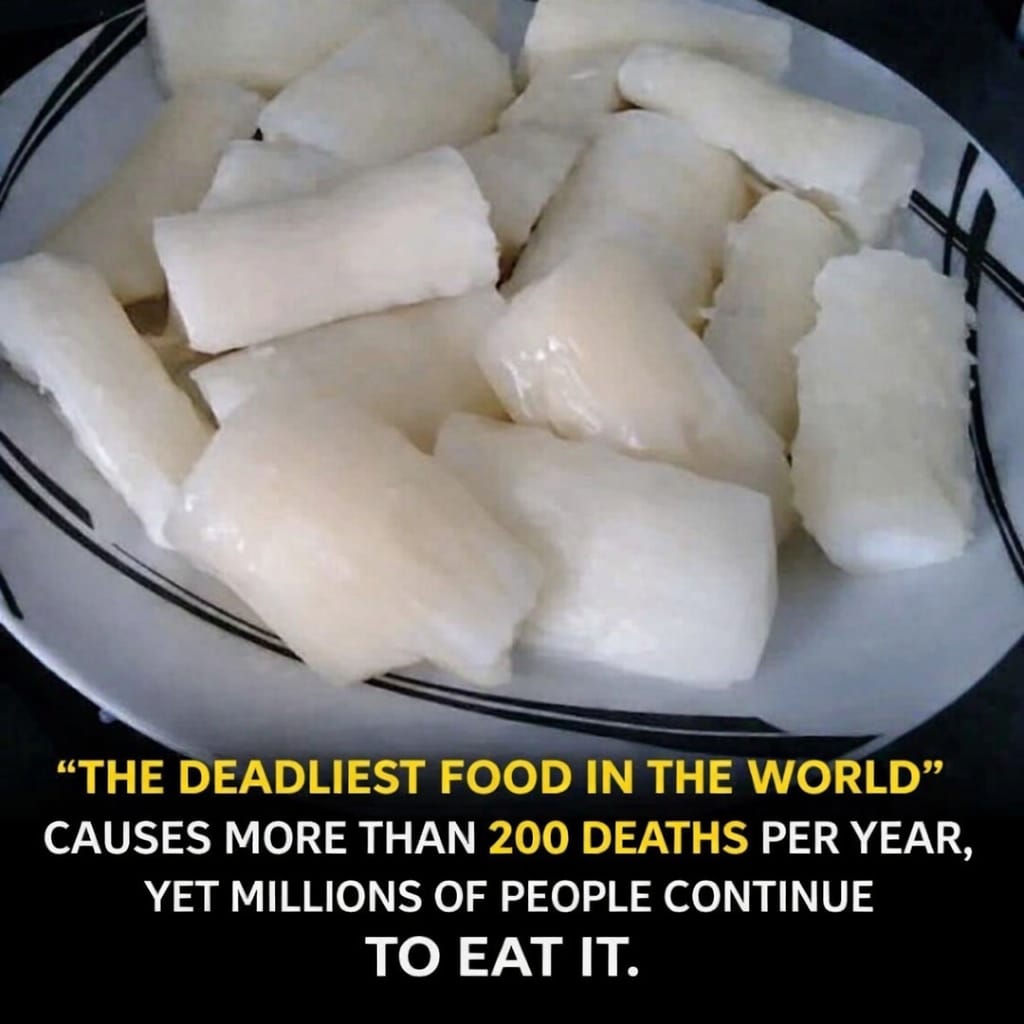
It’s an ingredient found in many cuisines around the world, prized for its smooth texture, versatility, and delicate flavor. However, behind its apparent harmlessness, cassava (manioc) hides a much less known… and potentially worrying aspect. What if one of the most consumed foods on the planet were also one of the riskiest when prepared incorrectly?
An everyday food… but one that requires caution.
Cassava, also called sweet or bitter manioc, is a tropical root vegetable that has been cultivated for centuries, especially in South America, Africa, and Asia. Every day, approximately 500 million people consume it in the form of mashed potatoes, fried foods, cakes, or flour.
But beware: cassava, especially the bitter variety , naturally contains compounds called cyanogenic glycosides . It sounds technical—and it is—but just remember this: if not properly removed, these substances can produce cyanide . Yes, the same poison that often appears in detective novels or spy movies.
Why is it called the “most dangerous food in the world”?
This alarming nickname stems from the fact that around 200 people die each year worldwide after consuming improperly prepared cassava. This occurs primarily in contexts of crisis, famine, or extreme poverty, where preparation methods are rushed or incomplete out of necessity.
The World Health Organization reminds us that “cassava must be processed properly to avoid dangerous cyanide exposure .” It’s not about stopping consumption, but about knowing how to cook it properly
