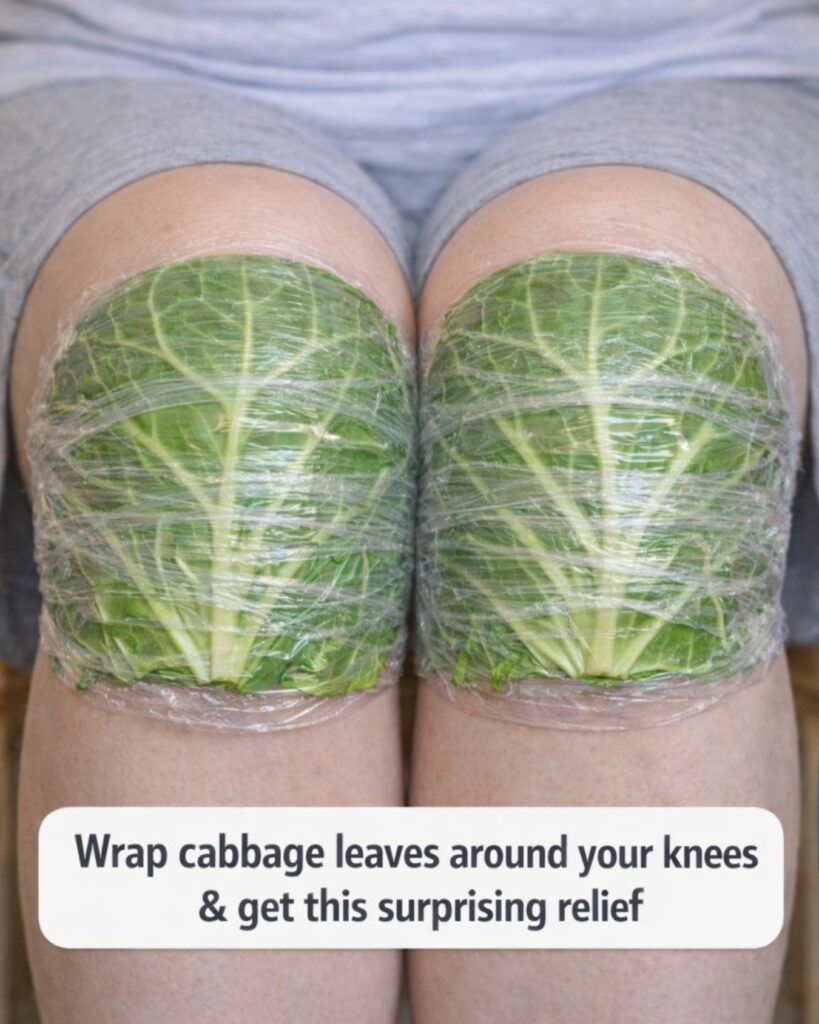
Why People Wrap Cabbage Leaves Around Their Knees
Using cabbage leaves as a compress for painful joints is not a new idea. In traditional European and folk medicine, crushed cabbage leaves have long been applied to swollen joints, bruises, and inflammatory conditions.
The concept is simple: the leaves are placed directly on the knee and wrapped with cloth or a bandage, allowing the natural plant compounds to interact with the skin.
People typically use this remedy to help with:
-
Osteoarthritis knee pain
-
Joint stiffness
-
Swelling after activity
-
Mild inflammation
-
Muscle soreness around the knee
The appeal is obvious: cabbage is inexpensive, easy to find, and generally safe for topical use.
What Science Says About Cabbage Leaves for Knee Pain
While it may sound like a folk remedy, several studies have actually tested cabbage leaf wraps.
A randomized clinical trial involving patients with knee osteoarthritis compared three treatments: cabbage leaf wraps, topical diclofenac pain gel, and usual care. After four weeks, the cabbage leaf group experienced significantly less pain than the usual care group and similar results to the anti-inflammatory gel.
Another study found that cabbage leaf compresses improved knee function and pain scores, showing results comparable to cooling gel pads and better outcomes than some topical medication treatments.
Researchers concluded that cabbage leaf therapy may be a low-cost complementary treatment for knee osteoarthritis, though larger studies are still needed.
In short:
-
It may reduce pain and stiffness.
-
It appears relatively safe for short-term use.
-
It works best as a supportive remedy rather than a cure.
Why Cabbage Leaves Might Reduce Knee Pain
The possible benefits come from the natural compounds found in cabbage.
Cabbage contains:
