And she’s no singular exception. Of 16 patients in Balachandran’s trial, eight showed a dramatic immune response to the mRNA-based vaccine. Seven of the eight are alive and well six years after the trial began, a finding that was to be presented Monday at the American Association of Cancer Research meeting in San Diego.
“It’s exciting,” Balachandran said. “The implication is that you can make a very strong immune response against the toughest of cancers, and it can last for this long. So if you could do it here, you could potentially do it in many other cancers.”
Although a study with 16 patients is far from definitive, a larger multisite trial has been underway for a year.
The announcement comes on the heels of other encouraging news for pancreatic cancer patients. Earlier this month, the New York Times published an interview with former US Sen. Ben Sasse of Nebraska, who has been battling advanced pancreatic cancer and told the Times he’s been taking an experimental drug that caused his tumors to shrink, albeit with some painful side effects. Last week, Revolution Medicines, the California-based biotech company running the phase 3 trial that Sasse is part of, said in a news release that for patients whose cancer had spread, the drug nearly doubled survival time to 13.2 months, compared with 6.7 months among participants who didn’t get the drug. Revolution also said it will seek approval from the US Food and Drug Administration for the drug, called daraxonrasib.

A promising technology under fire
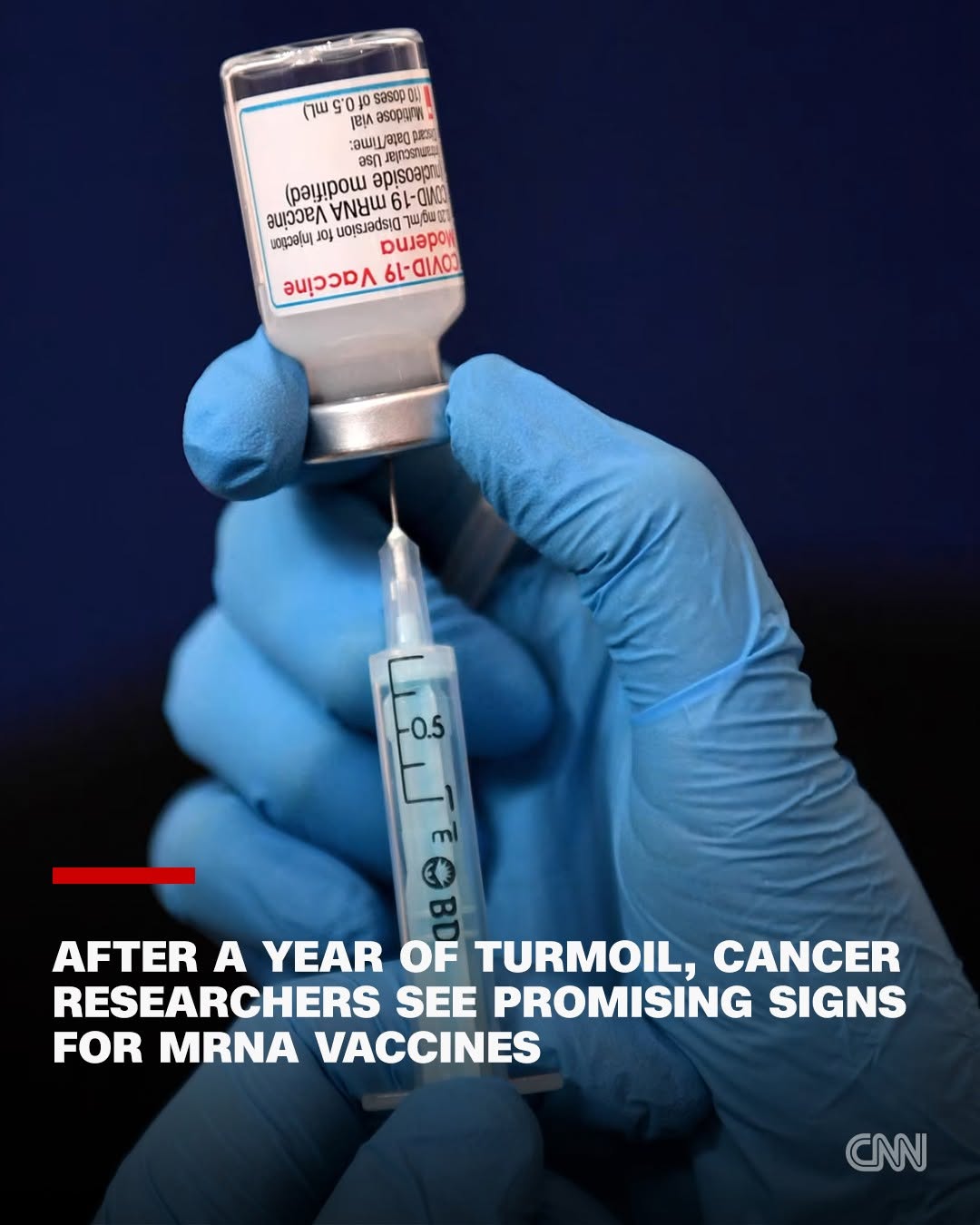
Although much smaller than the Revolution study, the MSK trial stands as proof of concept for the promise of mRNA-based vaccines. The field has been a source of great excitement in recent years. But it also faced backlash in the wake of the pandemic and public concerns over Covid vaccines, even as most experts say major safety concerns around the latter are unfounded.
For cancer researchers, an early warning sign appeared in March 2025, when scientists reported that the acting director of the National Institutes of Health, Dr. Matthew Memoli, had sent a letter asking that all grants, collaborations or contracts involving mRNA be flagged.
