“We’ve discovered that mRNA doesn’t need to be specific, to reprogram the immune response,” Sayour said.
“We’re trying to create a new paradigm,” he added. “It takes weeks to create a personalized vaccine. The idea of universalization is to wake up the immune system more rapidly.”
He says the two approaches could, in theory, complement each other: A newly diagnosed patient might receive an off-the-shelf vaccine to ramp up their immune system and a personalized vaccine later in their course of treatment.

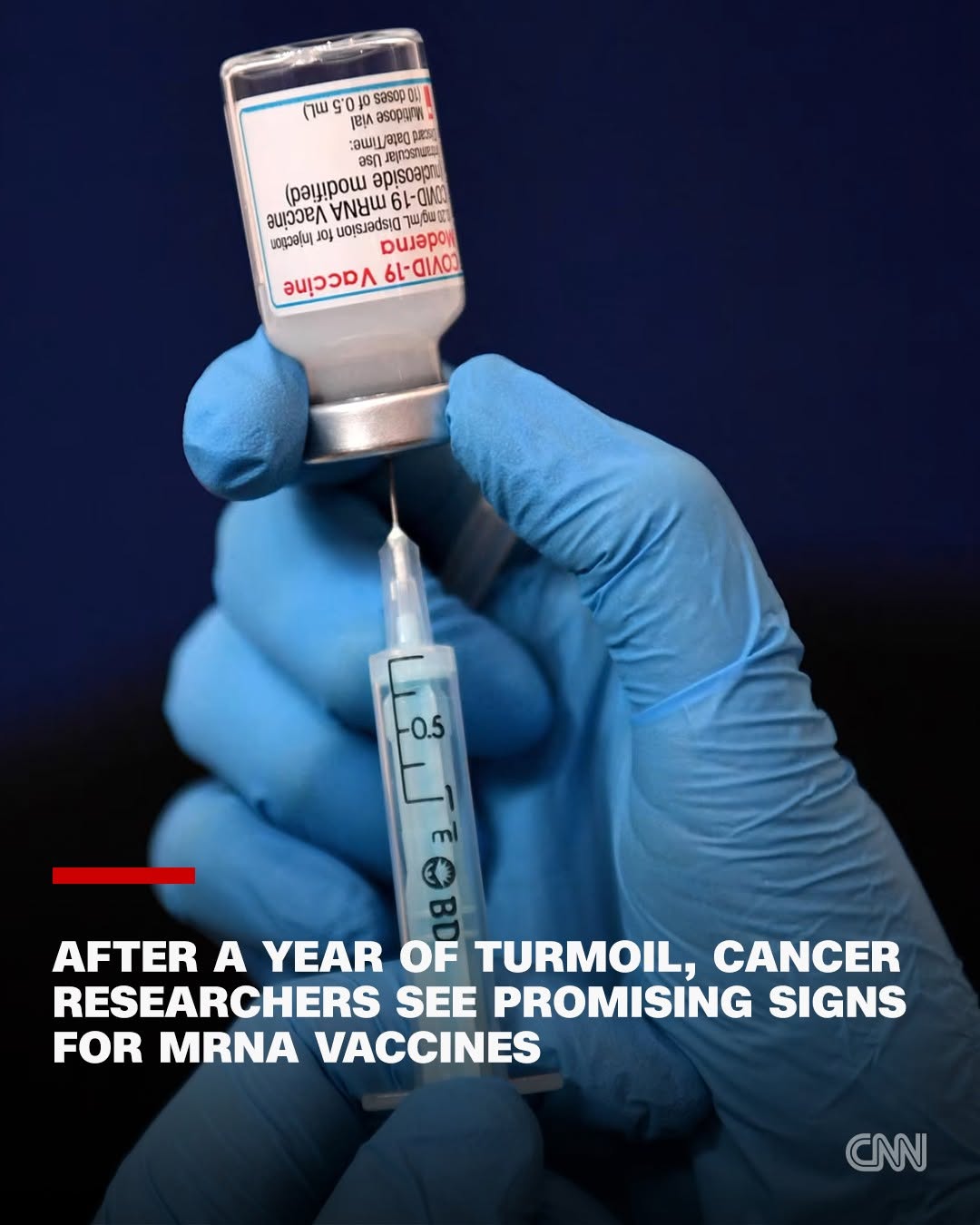
A recent illustration of the “universal vaccine” approach came in a study led by Drs. Adam Grippin and Steven Lin of MD Anderson Cancer Center. They reviewed records of more than a thousand cancer patients treated with immune checkpoint inhibitors and found that getting an mRNA-based Covid vaccine was linked to a significantly better response to cancer drugs.
Patients with small cell lung cancer who had gotten a Covid shot within 100 days of starting treatment lived nearly twice as long as those who hadn’t. For those with melanoma, researchers couldn’t calculate the difference in survival time because so many of the patients who had gotten a Covid vaccine were still alive.
“Most people think about vaccines as a laser-guided missile,” said Grippin, who before coming to MD Anderson was a graduate student in Sayour’s lab. “That may be true, but our research suggests that mRNA also acts as a siren call to the overall immune system.”
Grippin is now collaborating with Sayour to plan a trial in which patients will be intentionally given a Covid vaccine prior to starting cancer treatment.
