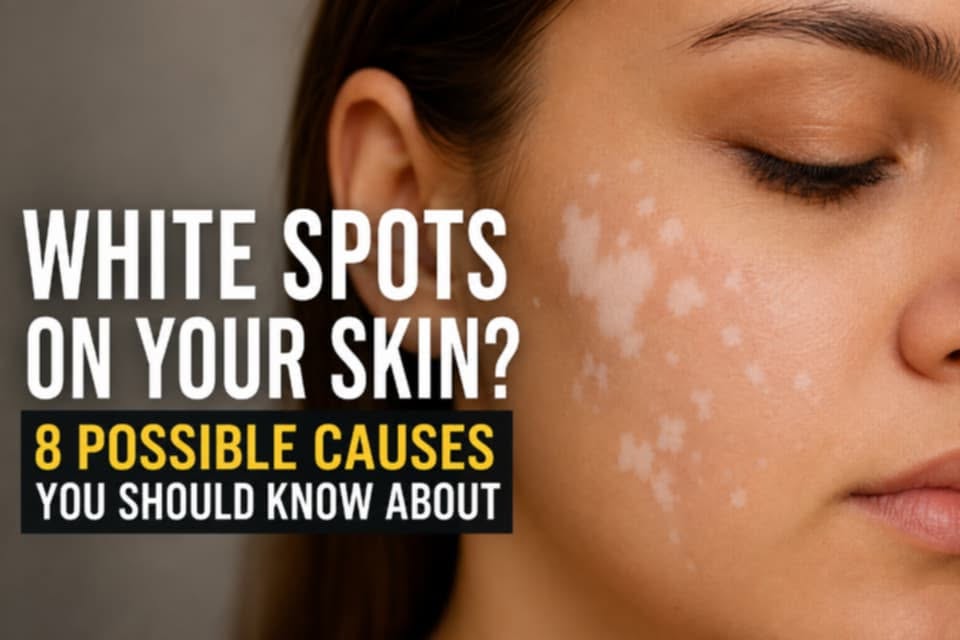
within an affected area can also become white or gray. Vitiligo is not contagious, and you cannot catch it from another person. It can affect people of all skin tones, although the contrast may be more noticeable on darker skin. If you notice new white patches that are increasing in size or number, it is worth speaking with a dermatologist for an accurate diagnosis. 2. Tinea Versicolor Another common cause of lighter patches is tinea versicolor, also known as pityriasis versicolor. Despite the name, this condition is not the same thing as vitiligo. It is caused by an overgrowth of a type of yeast that normally lives on the skin. The patches can be lighter or darker than the surrounding skin. They may appear on the chest, back, shoulders, upper arms, neck, or other areas of the body. Some people notice: – Light or pale patches – Fine scaling – Mild itching – Patches that become more noticeable after tanning – Several patches that gradually join together Tinea versicolor is more common in warm, humid conditions and among people who sweat frequently. The good news is that it is treatable. However, even after the yeast is controlled, the skin can take weeks or months to return to its normal color. 3. Pityriasis Alba Pityriasis alba is another possible explanation for lighter patches, particularly in children and young people. The patches are usually lighter than the surrounding skin and may have a slightly dry or flaky surface. They are often found on the face, especially around the cheeks. The color difference can become more noticeable after sun exposure because the surrounding skin tans while the affected area remains lighter. Pityriasis alba is generally considered a mild skin condition, but several other conditions can look similar. If you are unsure about the cause, a healthcare professional can help distinguish it from other