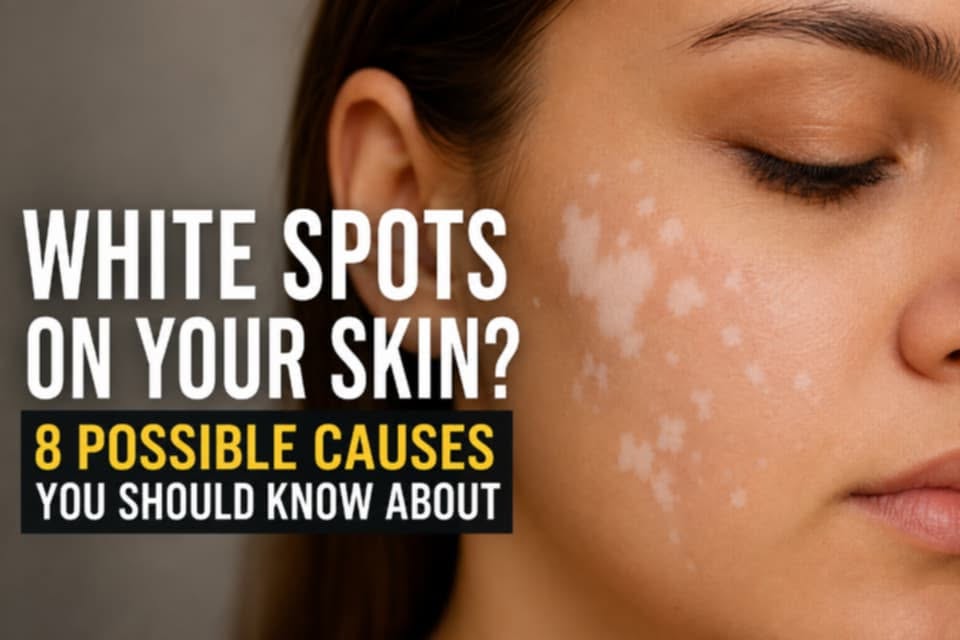
Birthmark or Long-Standing Pigment Difference Some lighter areas are present from childhood or may simply represent a stable difference in pigmentation. Certain birthmarks can appear as areas with less pigment than the surrounding skin. These may remain relatively stable over time. A stable spot that has been present for many years can be very different from a new patch that is rapidly changing. If you are unsure whether a mark is a birthmark, a normal pigment variation, or a developing skin condition, a medical examination can provide reassurance and an accurate diagnosis. How Can You Tell What Is Causing White Spots? Unfortunately, there is no reliable home test that can identify the cause of every white or light-colored patch. Pay attention to a few details: Location Where did the patches first appear? Face, hands, arms, chest, back, neck, and other areas can provide useful clues. Texture Is the affected skin completely smooth, or is it dry and scaly? Fine scaling can occur with tinea versicolor, while vitiligo typically causes a change in color rather than a scaly rash. Changes Over Time Are the spots becoming larger? Are new spots appearing? Are several patches joining together? These changes can help a healthcare professional understand what may be happening. Other Symptoms Tell your doctor if you also have itching, redness, irritation, pain, hair turning white in the affected area, or other changes. These details can be useful when making a diagnosis. When Should You See a Doctor? Consider making an appointment with a doctor or dermatologist if: – New white or light patches are appearing – Existing patches are getting larger – Several patches are spreading to different parts of the body – The skin is itchy, painful, inflamed, or scaly – Hair in the affected area is turning white – The color change does not improve – You are worried about the appearance or possible cause The American Academy of Dermatology recommends evaluation when new or worsening light spots appear or when they do not improve over time. A dermatologist can distinguish between conditions that may look similar and recommend appropriate treatment. Protecting Light or White Areas From the Sun Regardless of the cause, protecting areas with reduced pigmentation from excessive sunlight is a sensible step. Less-pigmented skin may burn more easily. This is particularly important with vitiligo because affected areas have lost some of the protective pigment normally provided by melanin. Simple precautions include using sunscreen, wearing protective clothing, and seeking shade during strong sunlight. Avoid deliberately trying to tan the surrounding skin to “hide” the spots. This can increase the contrast and expose your skin to unnecessary ultraviolet radiation. Can White Spots Go Away? That depends entirely on the cause. Some light spots may gradually become less noticeable as the underlying skin problem heals. For example, pigmentation can take time to return after inflammation or certain infections. With tinea versicolor, treatment can eliminate the fungal overgrowth, but normal skin color may take several months to return. The condition can also come back in the future. Vitiligo is different. Some people may experience partial return of pigment, but complete spontaneous return of lost color is uncommon. Dermatologists can discuss treatment options depending on the type and extent of vitiligo. Final Thoughts White spots on the skin can have many different causes, and the